

Bitcoin as a Capital Investment – Opportunities and Risks

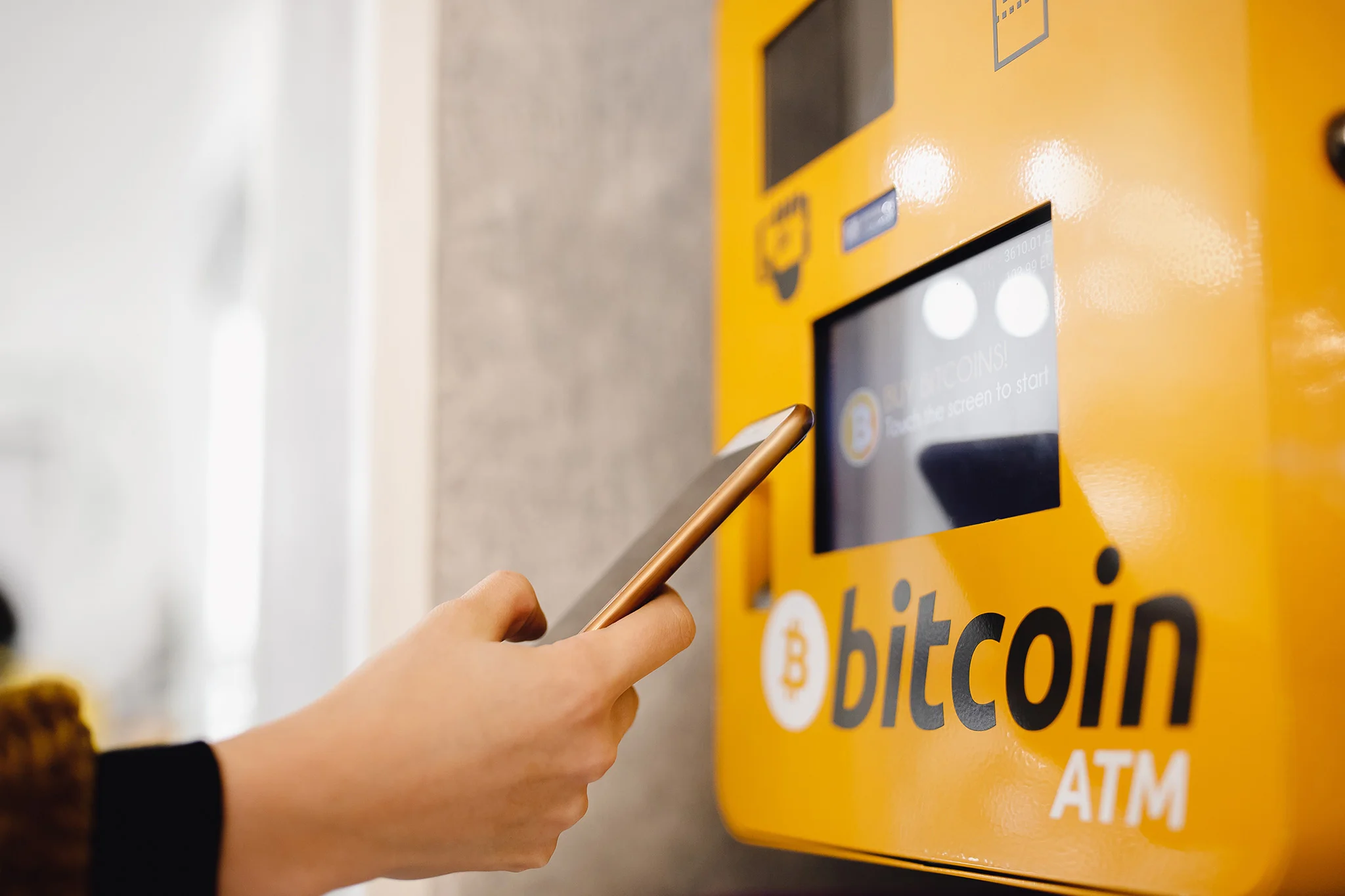
Since its release in 2009, Bitcoin has evolved from a cryptographic experiment into one of the most discussed investment assets in the world. Barely a week goes by without headlines: all-time high, Bitcoin crash, Elon Musk tweets, Donald Trump announces a Strategic Bitcoin Reserve. For investors, the question is no longer whether Bitcoin is relevant, but whether to invest now or wait – and whether it can truly hold its own against traditional assets like stocks and gold.
What Is Bitcoin and How Does It Work?
To understand Bitcoin as an investment, you first need to grasp the fundamental problem it solves: trust. In the traditional financial system, we rely on banks or central authorities to confirm that a transaction is legitimate and that money hasn’t been spent twice.
Bitcoin is the world’s first system to replace that trust with mathematics and decentralisation. It is a digital ledger (the blockchain) stored simultaneously on thousands of computers worldwide. Nobody owns the network, and nobody can alter it unilaterally. Who actually invented Bitcoin? The Bitcoin creator remains unknown to this day – they appeared under the pseudonym Satoshi Nakamoto and vanished without trace in 2011.
For investors, the mechanics can be summarised in three key points:
- The Blockchain: A chain of records in which every transaction ever made is stored immutably. This ensures absolute transparency.
- Decentralised Network: Instead of a central bank, the system is controlled by users (nodes) and computing power (miners). This makes Bitcoin censorship-resistant – no state can simply “freeze” an account.
- Digital Scarcity & Market Capitalisation: While central banks can print as much money as they like, the number of bitcoins is capped in the code at exactly 21 million units. Bitcoin’s market capitalisation – price × circulating supply – makes it the dominant asset across the entire crypto market today.
Technically, a mechanism called Proof of Work ensures that new bitcoins can only be created through significant energy expenditure, making manipulation economically pointless. Another central feature is the programmed halving: every four years, the amount of new bitcoins entering the system is cut in half. Historically, this halving has acted as an artificial supply shock that often marked the beginning of new price cycles and new all-time highs.
Bitcoin Price Forecast: Where Is the Price Headed?
The Bitcoin price forecast is the topic that preoccupies investors most. Reliable predictions are difficult – anyone who claims to know tomorrow’s exact Bitcoin price is lying. What can be analysed, however, are market cycles and sentiment indicators.
Two of the most popular tools:
- Bitcoin Fear and Greed Index: This index measures market sentiment on a scale from 0 (extreme fear) to 100 (extreme greed). Historically, extreme fear has often been a good buying opportunity – and extreme greed a warning signal. It is a simple, daily snapshot of investor sentiment.
- Bitcoin Heatmap: Heatmaps (e.g. based on the so-called MVRV Z-Score) use colour to visualise whether Bitcoin is historically cheap (blue/green) or overheated (red). They help identify major excesses – both to the upside and the downside, such as ahead of a potential Bitcoin crash or sharp price drop.
These indicators don’t replace fundamental analysis, but they are useful reference points for the question: buy or not?
Bitcoin Dominance: How Strong Is Bitcoin in the Crypto Market?
Bitcoin dominance describes Bitcoin’s percentage share of the total market capitalisation of all cryptocurrencies. When dominance is high (e.g. above 50–60%), capital flows primarily into Bitcoin – altcoins then tend to underperform. When dominance falls, sentiment often shifts in favour of alternatives.
For long-term Bitcoin investors, dominance is less relevant than for traders. More important is the bigger picture: Is the ecosystem growing overall? Are new institutional buyers entering the market?
The New Era of Institutional Adoption: ETF, Trump & Strategic Bitcoin Reserve
Just a few years ago, Bitcoin was considered a niche topic for tech enthusiasts. Those days are firmly over. With the approval of spot Bitcoin ETFs in the United States in 2024, the last barrier for large-scale capital was removed. Institutional heavyweights like BlackRock and Fidelity now act as bridge builders.
When the world’s largest asset manager refers to Bitcoin as a “flight to quality”, that fundamentally shifts the market structure. Additional political backing came from Donald Trump, who announced a Strategic Bitcoin Reserve – a US government Bitcoin reserve – during the 2024 election campaign. Such a step would elevate Bitcoin to the same level as gold as a strategic reserve asset.
Elon Musk has also repeatedly triggered price movements through his public statements and involvement in the crypto market. Whether as a driver or a risk factor: anyone who buys or sells Bitcoin should keep such influences in mind. Today Bitcoin is no longer held only by speculators, but serves as a strategic reserve for publicly listed companies. This “Wall Street adoption” brings greater liquidity, but also stronger correlation with global markets.
Suitability as an Investment: Bitcoin vs. Stocks vs. Gold
Each asset class serves a specific purpose. The term “Bitcoin stock” is also frequently searched – this typically refers to Bitcoin ETPs, or mining stocks such as Riot Platforms or MicroStrategy, which act as a proxy for the Bitcoin price. To decide whether Bitcoin belongs in a portfolio, a direct comparison helps:
1. Bitcoin vs. Stocks (Productive Capital)
Stocks are shares in companies that generate profits. Investing in the MSCI World means betting on global economic strength. Bitcoin, by contrast, is not a productive asset – it pays no dividends. Its appreciation is driven purely by rising demand against a fixed, scarce supply. Historically, Bitcoin has often outperformed the stock market in terms of returns, but volatility is 5 to 10 times higher.
2. Bitcoin vs. Gold – “Bitcoin Gold”
Bitcoin is often described as “Gold 2.0” – the term “Bitcoin Gold” symbolises this analogy. Both are scarce, hard to produce, and censorship-resistant. But Bitcoin surpasses gold in terms of portability and divisibility: fractions of a bitcoin can be sent in seconds, anywhere in the world. Gold, on the other hand, has a 5,000-year history as a store of value – Bitcoin barely two decades.
| Feature | Gold | Stocks (ETF) | Bitcoin |
|---|---|---|---|
| Scarcity | Physically limited | Unlimited (new issuance) | Mathematically fixed (21m) |
| Ongoing Returns | None | Dividends | None |
| Volatility | Low to Medium | Medium | Very High |
| Portability | Difficult | Digital (custody account) | Fully digital |
| History as Store of Value | ~5,000 years | ~150 years | ~15 years |
Bitcoin: Buy or Not? – An Honest Assessment
The question “buy Bitcoin or not” cannot be answered in a blanket way – it depends on investment horizon, risk tolerance, and personal circumstances. Those who decide to enter the market should be aware of the following:
- Bitcoin Savings Plan: Rather than waiting for the “right” moment, a monthly Bitcoin savings plan (DCA – Dollar Cost Averaging) significantly reduces timing risk. You buy less when the price is high, and more when it’s low – smoothing out volatility over time.
- Factor in Price Drops: Bitcoin price declines of 50–80% are historically not the exception but the norm. Anyone who cannot endure this psychologically and financially should size their position accordingly.
- Long-Term Horizon: Investors who have held through at least one full four-year market cycle have almost never exited at a loss in the past.
The Tax Advantage: A Major Benefit for German Investors
One aspect that makes Bitcoin particularly attractive as an investment in Germany is its current tax treatment. Unlike stocks or ETFs, where gains are generally subject to the flat-rate withholding tax (Abgeltungssteuer, plus solidarity surcharge and, where applicable, church tax), Bitcoin is treated as a “other economic good” for tax purposes (§ 23 EStG).
What this means for you as an investor:
- One-Year Holding Period: If you hold your bitcoins for more than 12 months, any gains on a subsequent sale are completely tax-free – regardless of whether the profit is €1,000 or €1 million.
- Exemption Threshold: For sales within the one-year period, gains up to an exemption threshold of €600 (potentially higher from 2024 onwards due to legislative changes) remain tax-free. However, if this threshold is exceeded, the entire gain must be taxed at the personal income tax rate.
- Bitcoin ETF vs. Direct Investment: Anyone holding Bitcoin via an ETF or ETP in a standard custody account loses this tax advantage – the standard withholding tax applies. To benefit from the one-year tax exemption, you must hold actual Bitcoin directly.
This tax advantage can dramatically increase net returns compared to stocks. While you keep approximately €7,360 from €10,000 in stock gains after tax, with Bitcoin you keep the full €10,000 after one year of holding.
Bitcoin Ban: Is It Possible?
A frequently discussed risk is a potential Bitcoin ban. Countries like China have actually prohibited buying and trading – with a measurable, if temporary, impact on the price. What would a ban in Germany or the EU mean?
The Bitcoin protocol itself cannot be shut down – the network runs decentrally worldwide. What states can prohibit is the exchange into euros, the use of regulated exchanges, and commercial custody. A total ban would be technically very difficult to enforce, but would massively impact liquidity and therefore the price. In the EU, the current MiCA framework focuses on regulation rather than prohibition – a positive signal for investors.
The ESG Debate: How “Dirty” Is Bitcoin Really?
A common criticism is the high energy consumption of the Bitcoin network. For environmentally conscious investors (ESG criteria), the question arises: is an investment morally justifiable?
The debate is more complex than headlines suggest:
- Energy Mix: Studies (e.g. from the Bitcoin Mining Council) show that over 50% of the energy used for Bitcoin already comes from sustainable sources. Miners go where electricity is cheap – and today that is often surplus wind, solar, or hydroelectric power.
- Grid Stabilisation: Bitcoin miners can shut down their operations in seconds. This makes them a “buffer” for the electricity grid, absorbing excess capacity when the sun is shining and stepping back when industry needs the power.
- Methane Mining: Innovative projects use methane gas released during oil extraction (which would otherwise be flared off unused) to generate electricity for Bitcoin miners. Since methane is far more harmful to the climate than the CO₂ produced when it is burned, this can even result in a negative carbon footprint (carbon negative).
Nevertheless, the absolute consumption remains high. Investors must weigh up whether providing a free, censorship-resistant financial system is worth this energetic “price”.
Where and How to Buy? How to Buy Bitcoin Safely
There are three common ways to get started today. Anyone wondering how to buy Bitcoin safely should above all focus on regulated providers and self-custody:
1. Crypto Exchanges & Brokers
Providers such as BSDEX (Börse Stuttgart Digital Exchange) or Bitpanda offer regulated platforms in the German-speaking world. Buying here is as straightforward as online banking. Important: never leave more on the exchange than you intend to trade in the short term.
2. Bitcoin ETPs / ETFs
Those who want to hold Bitcoin in a traditional custody account use securities. Caution: The tax advantage of the one-year holding period often does not apply here, as this is a financial product and not the economic good itself. Check this carefully in advance! Anyone wishing to invest via a Bitcoin savings plan through a broker will now find this option available from several neo-broker providers.
3. The Gold Standard: Hardware Wallet Comparison
For long-term holdings, a “cold wallet” is indispensable. In any wallet comparison, BitBox02 (Swiss-made, open source) and Ledger (market leader, broad coin support) consistently come out on top. Both should be purchased directly from the manufacturer – never through third-party sellers or Amazon. Only those who control their own 24 words (seed phrase) are truly independent.
Investor Checklist
Bitcoin Investment Checklist:
- STRATEGY:
- Investment horizon of at least 4 years (one full cycle including halving)
- Bitcoin savings plan (DCA) set up to smooth out volatility
- Monitor market conditions using the Fear & Greed Index and heatmap
- CUSTODY & TAX:
- Document purchase receipts (important for the tax authorities!)
- Hardware wallet purchased directly from the manufacturer (wallet comparison: BitBox02 or Ledger)
- Backup of the 24 words stored offline (on metal or paper)
- SECURITY:
- Two-factor authentication (NO SMS code – use an app such as Aegis/Google Auth)
- No bragging: never tell anyone online about the size of your holdings
- Monitor Bitcoin ban risk in your home country (EU: follow MiCA regulation)
Investing in Bitcoin: Return Potential vs. Complexity
Bitcoin is not a “safe investment” in the traditional sense. It is a revolutionary technology that redefines the concept of ownership in the digital realm. Institutional acceptance through ETFs, political backing from initiatives such as the Strategic Bitcoin Reserve under Donald Trump, and the tax advantages in Germany make it one of the most compelling additions to any portfolio.
Bitcoin is set to keep rising over the long term. The question is whether other, potentially more traditional assets such as stocks might outperform it, and to what extent the added complexity of Bitcoin actually pays off for the investor.
Anyone looking to invest in Bitcoin should not underestimate the learning curve: setting up a wallet, keeping track of taxes, understanding market cycles, reading heatmaps and the Fear & Greed Index – all of this takes time. Those who prefer to avoid the effort can still gain exposure to price movements through a regulated Bitcoin ETF or savings plan.
Ultimately, Bitcoin is a decision in favour of personal financial sovereignty. Those willing to master the complexity and endure the volatility are participating in one of the most fascinating economic experiments of our time.