

Individual ownership – sole property within a condominium

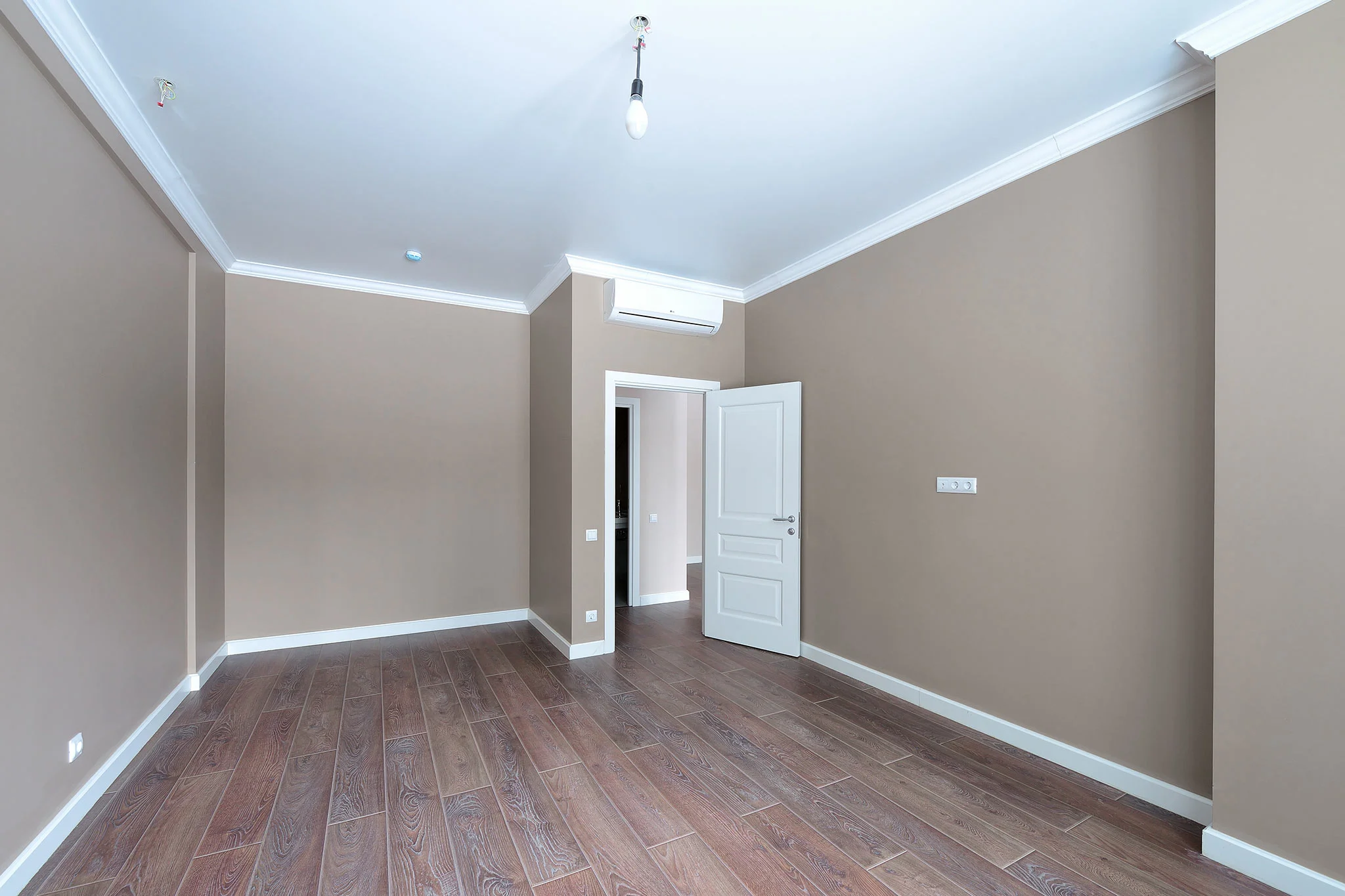
Separate property (Sondereigentum) is the sole ownership of an apartment or non-residential rooms within a homeowners’ association (WEG). It is established by the declaration of division (Teilungserklärung), entered into the land registry (Grundbuch), and is always linked to a co-ownership share in the common property (Gemeinschaftseigentum).
Separate property typically includes the interior spaces of the apartment, including non-bearing partition walls, floor coverings, interior doors, and sanitary facilities – but not the windows, exterior walls, roof, or load-bearing structural elements.
You alone pay for the maintenance of your separate property, while the community pays for the common property in proportion to their co-ownership shares. The precise boundary between separate property and common property therefore directly determines who bears which costs – making it one of the most frequent points of contention in homeowners’ associations.
What is Separate Property? Definition and Legal Classification
The definition of separate property can be found in Sections 3 and 5 of the German Condominium Act (WEG). Separate property under the WEG is the “true”, sole ownership of a specific apartment (referred to as residential property/Wohnungseigentum) or of rooms not used for residential purposes, such as shops, offices, or garages (referred to as non-residential property/Teileigentum).
Simply explained, separate property means: within a building owned jointly by several people, a clearly defined part belongs entirely to you alone.
Without the WEG, this would not be possible at all. According to Sections 93 and 94 of the German Civil Code (BGB), the general rule is: essential components of a building cannot be the subject of separate rights – a house as a whole belongs to the owner of the plot of land.
The Condominium Act of 1951 breaks with this principle and allows for the establishment of true sole ownership of individual rooms. Anyone wondering what separate property means in relation to a condominium gets the answer here: the condominium unit itself is the separate property, combined with a co-ownership share in the common property (the land, building envelope, stairwell, etc.).
The Three Building Blocks of Condominium Ownership
Legally, condominium ownership always consists of three inseparably linked elements:
- the separate property of the apartment or specific rooms,
- the co-ownership share in the common property (usually expressed in thousandths or ten-thousandths), and
- the membership right in the homeowners’ association, including voting rights at the owners’ meeting.
Therefore, you cannot sell the separate property of your apartment without its associated co-ownership share – both form a legal entity that is kept as a whole in the land registry (condominium land register).
What Does Separate Property Mean in Practice?
Within your separate property, you are generally free to do as you please: renovate, paint walls, replace floor coverings, modernize the bathroom, rent it out, or sell it – without having to ask the other owners.
The limit is reached where common property is affected or where other owners are disadvantaged beyond what is unavoidable (Section 14 WEG). For example, anyone wishing to remove a load-bearing wall inside the apartment is interfering with the common property and requires a resolution from the association.
Separate Property and Common Property: The Boundary
The distinction between separate property and common property is derived from Section 5 WEG. Separate property includes the rooms assigned in the declaration of division as well as the components of the building belonging to these rooms that can be altered, removed, or installed without impairing the common property or the separate property of others, or altering the external appearance of the building.
On the other hand, all parts of the building that are essential for its existence or safety, as well as installations and facilities intended for joint use, are mandatorily common property – even if they are physically located inside an individual apartment. A declaration of division cannot validly declare such structural elements to be separate property; any such clauses are null and void.
What Belongs to Separate Property? Examples
- non-bearing interior partition walls within the apartment
- interior doors including frames
- floor coverings such as parquet, tiles, laminate, or carpet (but not the screed, see below)
- wall and ceiling plaster, as well as wallpaper and paint inside the rooms
- sanitary fixtures such as bathtubs, showers, toilets, and sinks
- fitted kitchen and built-in furniture
- pipes and wiring for water, sewage, and electricity from the point where they exclusively serve your own apartment
- depending on the declaration of division: basement room, garage, or parking space assigned as separate property
What is Mandatorily Common Property?
- the plot of land including garden areas and access paths
- load-bearing walls, ceilings (raw concrete ceilings), foundations, and the roof including skylights
- the facade, exterior walls, and thermal insulation
- windows including frames and exterior paint, and generally the apartment entrance door
- stairwell, elevator, hallway, laundry room, and other common rooms
- central heating system, risers, downpipes, and joint utility lines up to the first shut-off valve inside the apartment
- the structural elements of balconies (floor slab, parapet, insulation layer)
Separate Property / Common Property: List of Key Structural Elements
The following table summarizes which elements are usually separate property and which are common property. The individual case is always decisive, in particular the declaration of division – provided it does not violate mandatory law.
| Component / System | Standard Case | Note |
|---|---|---|
| Interior doors, interior plaster, wallpaper | Separate property | Can be freely designed by the apartment owner |
| Floor covering (parquet, tiles, carpet) | Separate property | Replacement permitted, impact noise protection must be observed |
| Screed | Common property | Part of the floor slab or sound insulation; whether screed is common or separate property is predominantly answered in favor of common property |
| Windows including frames | Common property | Mandatory, Federal Court of Justice (BGH) case law (V ZR 174/11) |
| Roller shutters, blinds (exterior) | Common property | Shape the external appearance; internal strap disputed, usually separate property |
| Apartment entrance door | Common property | BGH V ZR 212/12; interior painting is separate property |
| Balcony (floor slab, parapet, waterproofing) | Common property | Only the interior air space and, if applicable, the balcony floor covering are separate property |
| Radiators and thermostat valves | Depending on the declaration of division | Can be allocated to separate property via the declaration of division (BGH V ZR 176/10) |
| Central heating, rising mains | Common property | Serves the joint use of the community |
| Floor heating / Gas boiler in the apartment | Separate property | Serves only the owner’s unit |
| Pipes from the branch into the apartment | Separate property | From the first shut-off valve or from the branch off the joint main pipe |
| Shut-off valve at the transfer point | Common property | The shut-off valve of the water pipe often marks the boundary; details are disputed |
| Fuse box (sub-distribution board) in the apartment | Separate property | Main distribution board and risers are common property |
| Water meters / Heat meters | Predominantly common property | Meters serve the joint billing of consumption |
| Smoke detectors | Disputed; often common property in case of uniform equipment | State building regulations and resolutions must be observed |
| Skylights | Common property | Part of the roof and building envelope |
| Awning, outdoor antenna, satellite dish | Structural change to common property | Installation generally requires a resolution from the association |
| Conservatory (Winter garden) | Structure: Common property | Alters the external appearance; interior space can be separate property |
Declaration of Division, Land Registry, and Partition Plan
Separate property does not arise automatically, but through the declaration of division (Section 8 WEG) or through contractual granting among co-owners (Section 3 WEG). The declaration of division defines which rooms belong to which unit, how large the co-ownership shares are, and which special use rights exist. The attached partition plan – a blueprint stamped by the building authority – visually shows the boundary of the units; all rooms of the same unit bear the same number.
A separate condominium or non-residential land registry sheet is created for each unit. Separate property and the land registry are thus inseparably linked: separate property only comes into legal existence once it is registered. If you have a legitimate interest, you can inspect the declaration of division and the land register at the land registry office of the responsible local court; this is based on the German Land Register Act (GBO).
When buying an apartment, you should always read the declaration of division completely. It answers questions such as: Is the basement room separate property or is there only a special use right? Are the roller shutters assigned to the separate property in the declaration of division? Does the declaration of division contain a cost regulation for windows? Such cost shifting is legally permissible, even if the structural element itself mandatorily remains common property.
Separate Property, Non-Residential Property, and Special Use Rights: The Differences
Three terms are constantly confused in everyday life: separate property (Sondereigentum), non-residential property (Teileigentum), and special use rights (Sondernutzungsrecht). Legally, they are worlds apart – especially when it comes to sales, financing, and costs.
Separate Property vs. Non-Residential Property
The difference between separate property and non-residential property is purely conceptual and functional: both are true sole ownership under the WEG. If the unit is used for residential purposes, the law speaks of residential property (Wohnungseigentum); if it is not used for residential purposes (shop, practice, office, garage), it is called non-residential property (Teileigentum) (Section 1, Paragraph 3 WEG).
Therefore, whether a garage is non-residential property or separate property is not an either-or question: a garage designated as an independent unit is non-residential property – and non-residential property is a form of separate property for rooms not used for residential purposes.
Difference Between Separate Property and Special Use Rights
In contrast, the difference between separate property and special use rights is fundamental. A special use right (Sondernutzungsrecht) is not ownership, but merely the right to exclusively use an area of the common property – typically garden areas, outdoor parking spaces, or basement compartments. The area remains common property; the other owners are merely excluded from using it.
| Criterion | Separate Property | Special Use Right |
|---|---|---|
| Legal Nature | True sole ownership | Right of use on common property |
| Registration | Separate land registry sheet | Agreement, noted in the land registry as part of the separate property |
| Separate Sale | Possible if it is an independent unit (e.g., garage as non-residential property) | Only transferable to other owners of the same association, not to third parties |
| Bank Financing | Yes | No, only indirectly through the apartment |
| Structural Changes | Free within the boundaries of Sections 13 and 14 WEG | Only with permission of the association, as it is common property |
| Maintenance Costs | Borne solely by the separate property owner | Generally borne by the association, but often imposed on the beneficiary via agreement |
| Typical Examples | Apartment, basement, garage, parking space | Garden area, outdoor parking space, terrace area |
Converting a Special Use Right into Separate Property
A special use right can be converted into separate property if the area is eligible for separate property. Since the WEG reform of 2020 (Act on the Modernization of Condominium Ownership, information available at the Federal Ministry of Justice), parking spaces and – as so-called annex property (Annexeigentum) – open spaces such as terraces or garden shares can also be assigned to separate property (Section 3, Paragraph 1 Sentence 2, Paragraph 2 WEG).
This requires the consent of all owners, a notarized amendment of the declaration of division, the consent of the mortgage creditors if applicable, and registration in the land register. The same applies to the conversion of common property into separate property, for example, if a previously shared attic space is to be added to an apartment. The reverse path – transferring separate property into common property – is also only possible with the consent of all parties involved.
Disputes from A to Z: Windows, Balconies, Radiators, and Co.
Most conflicts in homeowners’ associations revolve around whether a specific structural element is separate property or common property. An overview of the most important cases.
Are Windows Separate Property or Common Property?
Windows including their frames are mandatorily common property – according to the Federal Court of Justice in its landmark ruling of March 2, 2012 (Case No. V ZR 174/11, available via the decision database of the Federal Court of Justice). This applies even if the declaration of division assigns the windows to separate property; such a clause is invalid. The reason: windows shape the external appearance of the building and are part of the building envelope. The question of whether windows in an apartment building are separate property must therefore be clearly answered in the negative.
It is crucial to distinguish between ownership and cost-bearing: the declaration of division can validly impose the costs for maintenance and replacement of windows on the individual apartment owners. If the declaration of division states that windows “belong to separate property” and the owner must maintain them, this is frequently interpreted as such a cost allocation rule.
Only the interior paint of the windows is true separate property. The same applies to balcony doors as to windows: they are common property – only the interior paint and, according to popular opinion, the interior handle of a terrace door are assigned to separate property, because they can be replaced without interfering with the building structure.
Is the Balcony Separate Property?
For balconies, a split applies: the structural parts and those shaping the external appearance – the floor slab, parapet, railing, insulation, waterproofing layer, and the balcony drain – are common property. Separate property only covers the air space of the balcony and, as a rule, the walk-on balcony floor covering (such as tiles or slabs).
Therefore, the answer to the question of whether balconies are separate property or common property is: both, depending on the component. The declaration of division often assigns the balcony to the separate property of the respective apartment; this is permissible, but only covers the parts eligible for separate property.
Regarding the maintenance of a balcony in separate property, this means: cracks in the floor slab, leaking waterproofing, or a corroded railing are repaired by the association at the expense of all owners. You pay for renewing the floor covering yourself. The same applies to terraces and roof terraces: the waterproofing level of the roof terrace is common property as part of the roof, and the maintenance of the terrace in separate property is limited to floor coverings and installations above the waterproofing.
Are Radiators Separate Property?
For radiators, it depends on the declaration of division. The BGH decided (ruling of July 8, 2011, Case No. V ZR 176/10) that radiators and the associated pipes up to the connection to the central heating system, as well as thermostat valves, can be allocated to separate property by the declaration of division – they are not mandatorily common property.
If the declaration of division is silent, radiators are predominantly attributed to common property because they are part of the central heating system. The question of whether radiators are separate or common property can therefore only be answered by looking at the declaration of division.
On the other hand, an individual floor heating system (boiler) that exclusively serves your own apartment is regularly separate property. In the case of underfloor heating, the heating coils laid in the apartment and the valves are eligible for separate property according to common opinion, but the screed above them remains common property – a detail that has major practical significance in the event of leaks.
Roller Shutters, Blinds, and Awnings
Whether roller shutters are separate or common property is answered similarly to windows: the externally visible shutter profile, guide rails, and roller shutter box shape the facade and are common property. Interior control elements, such as the roller shutter strap or an electric motor with a switch, are usually attributed to separate property.
If the declaration of division contains an explicit assignment or cost regulation for roller shutters, this takes precedence as long as it is legally permissible. Interior blinds are unproblematically separate property. Awnings, on the other hand, are retrofitted installations: their attachment to the facade is a structural change to the common property and requires an authorization resolution.
Apartment Entrance Door and Interior Doors
Following the BGH decision of October 25, 2013 (Case No. V ZR 212/12), the apartment entrance door (the door leading to the stairwell) is entirely common property because it physically forms the boundary between common and separate property and shapes the appearance of the stairwell. Only the paint on the inside of the apartment is separate property. An unauthorized replacement of the door – for instance, with a security door of a different color – is therefore impermissible. In contrast, all interior doors within the apartment are pure separate property.
Which Pipes and Wiring Belong to Separate Property?
For pipes and wiring, there is a rule of thumb: everything that serves multiple units is common property – everything that exclusively serves your apartment from the branch point onward can be separate property. Rising mains, downpipes, and main distribution lines for water, sewage, heating, and electricity are therefore common property, even if the pipes run inside the walls of your apartment.
Sewage pipes or drainpipes, according to BGH case law, only become separate property from the point where they have passed the first shut-off or disconnection point behind the joint main; the main vertical drops always remain common property.
For drinking water, the shut-off valve of the water pipe often marks the boundary: whether the shut-off valve itself is separate or common property is disputed; predominantly, shut-off valves at the transfer point are still classified as common property because they serve the system as a whole. The water pipe behind it, which only serves your apartment, is separate property.
For the electrical installation of the condominium, the following applies: power lines from the apartment sub-distribution board (fuse box inside the apartment) are separate property; the main house connection, risers, and main distribution board are common property. The fuse box inside the apartment itself is mostly classified as separate property, whereas the central meter cabinet is not.
Water meters and heat meters serve the joint billing of consumption and are therefore – just like centrally procured smoke detectors – frequently assigned to the common property or the administrative responsibility of the association; here, it is worth looking at the declaration of division and the resolutions.
Basement: Separate Property or Common Property – and What is Allowed?
A basement room can be assigned as separate property in the declaration of division of the apartment (in which case it appears in the partition plan with the same number as the apartment), or there may only be a special use right to a basement compartment.
In a basement that is separate property, anything is allowed that does not use the room contrary to its purpose and does not affect others: storage, installing shelves, setting up a workbench. Converting the room into living space, connecting it to the heating system, or interfering with joint installations running through the basement are not permitted without further authorization. The designated purpose defined in the declaration of division (“basement”, “hobby room”) is binding.
Garage, Parking Space, and Underground Garage as Separate Property
A garage can be legally structured in various ways: as an independent non-residential property with its own land registry sheet, as separate property assigned to an apartment, or as a mere special use right to a common area. Which variant applies is determined by the declaration of division and the land register – so looking at the land register is twice as valuable for garages.
Since the WEG reform of 2020, parking spaces are deemed rooms by law (Section 3, Paragraph 1 Sentence 2 WEG) and are therefore eligible for separate property – this applies to underground parking spaces, double stackers (duplex spaces), and since then, also to outdoor parking spaces.
Before the reform, underground parking spaces could only be separate property if they were bounded by permanent markings; outdoor spaces were not eligible for separate property at all, which is why special use rights mostly exist here to this day. Whether a parking space is separate property or a special use right decides on its sellability and eligibility for mortgage financing.
Sale, Maintenance, and the Garage Door
You can sell a garage that is separate property or non-residential property with its own land registry sheet separately – depending on the community rules, even to third parties outside the association; some declarations of division restrict the sale of the garage to other apartment owners. In contrast, a special use right to a parking space can only be transferred within the community.
For the maintenance of a garage in separate property, the usual separation applies: the floor slab, walls, and roof of the garage are structural parts and are common property, the repair of which is the responsibility of the association. The garage door – similar to the apartment entrance door – is predominantly attributed to common property because it shapes the external appearance; however, the declaration of division can impose the costs of maintenance and repair of the garage door on the respective owner. Electric drives and remote controls retrofitted for only one unit are separate property.
Garden and Terrace: Separate Property, Special Use Rights, and Property Tax
The classic garden case: until 2020, land plots could not be separate property at all – the garden was always common property, over which at most a special use right existed. Since the WEG reform, a garden share can be declared separate property as annex property (Annexeigentum) to an apartment, provided the apartment economically remains the main property (Section 3, Paragraph 2 WEG). In existing developments, however, “garden as separate property” remains the exception; it is usually a special use right to the garden, which is common property.
Garden as Separate Property: What is Allowed?
What is allowed in the garden depends on the legal classification:
- Under a special use right, gardening, flowerbeds, mobile furniture, and normal usage are permitted. Structural changes – a garden shed, paved terrace, fixed pool, high hedges for privacy – require a resolution from the association because they alter the common property.
- In the case of true separate garden property (annex property), you have more freedom but remain bound by Section 14 WEG, the community rules, and public building regulations; a structural change in the garden separate property that alters the external appearance of the development may still require approval.
For property tax (Grundsteuer), the following applies: for condominium ownership, the entire economic unit – separate property plus the co-ownership share in the plot of land including garden areas – is assessed. A special use right to the garden does not increase the co-ownership share; the shares entered in the land register are decisive. Questions about valuation can be answered by your responsible tax office; general information is provided by the Federal Ministry of Finance.
Maintenance and Costs: Who Pays for What?
The cost consequences are the real reason why the boundary is so important. The basic principle from Section 16 WEG:
- Costs for separate property are borne solely by the respective owner – from a dripping faucet to a bathroom renovation.
- Costs for common property are borne by the community, distributed according to co-ownership shares (MEA), unless a deviating distribution has been agreed or resolved.
Since the WEG reform, the association can specify a deviating allocation key for individual cost types or in specific cases by majority vote (Section 16, Paragraph 2 Sentence 2 WEG) – for instance, imposing window costs on the respective owner.
Example Calculation 1: Window Replacement
In an association with 10 units, all 30 windows are replaced, total cost €90,000. Your apartment has a 120/1,000 co-ownership share and has 4 windows.
| Allocation Variant | Calculation Method | Your Share |
|---|---|---|
| Statutory key according to co-ownership shares (MEA) | €90,000 × 120/1,000 | €10,800 |
| Resolution: Costs per window (object-related) | €90,000 ÷ 30 windows × 4 windows | €12,000 |
| Declaration of division: everyone pays for “their” windows themselves | 4 windows × €3,000 | €12,000, but commissioning is done by the association, as it is common property |
Note: Even if you bear the costs alone, replacing windows remains a measure on the common property – you are not allowed to install new windows on your own authority.
Example Calculation 2: Balcony Renovation
The waterproofing of your balcony is leaking; the renovation costs €8,000, of which €1,200 is for the new tile covering. Since the floor slab and waterproofing are common property, the association pays the €6,800 for the structural repair according to MEA (at 120/1,000, this is €816 for you).
You pay the €1,200 for the floor covering as your separate property alone – unless the destruction of the covering was an unavoidable consequence of repairing the common property; in that case, the association must cover the floor covering as part of the restoration. Total cost for you depending on the situation: between €816 and €2,016.
Water Damage in Separate Property: Processing, Responsibility, Insurance
Water damage in a condominium is the practical case where all boundary issues converge. Two questions are crucial: Where is the cause of the damage located – in the separate property or in the common property? And what is damaged?
Who Pays in the Event of Water Damage in Separate Property?
| Situation | Responsibility for the Cause | Responsibility for Consequential Damage |
|---|---|---|
| Riser pipe (common property) leaks, damage in separate property | Repair by the association | Building insurance of the association; without insurance and without fault, each owner generally bears damage to their separate property themselves |
| Pipe in separate property leaks, damage only in own apartment | Owner | Residential building insurance (tap water), otherwise the owner |
| Damage originating from neighbor’s separate property (e.g., overflowed tub) | Neighbor | If negligent, their private liability insurance; otherwise building insurance; no-fault compensation according to Section 906 Paragraph 2 BGB analogously possible |
| Washing machine hose bursts, water runs into the stairwell | Owner/Instigator | Building insurance for the common property, recourse in case of negligence |
Important for damage to separate property caused by common property: the association is not automatically liable for damage to your separate property caused by a defective joint system. A claim for damages requires fault – for example, if the management or the association neglected their duty to repair a known leaking riser (Section 280 BGB). Without fault, you must rely on the residential building insurance.
Residential Building Insurance and Separate Property
The combined residential building insurance of the association insures the entire building – common property and separate property, including permanently installed components such as floor coverings, built-in kitchens (depending on policy terms), and sanitary fixtures. In the event of tap water damage in separate property, the association’s building insurance is regularly obligated to cover the damage, not your household contents insurance; the latter only covers movable items.
Check the insurance policy: some policies contain deductibles, the distribution of which within the association has been clarified by the BGH – the deductible is to be distributed like a common loss according to the general cost allocation key, even if only separate property is affected. Independent information on building insurance for condominiums is provided by the Consumer Advice Center (Verbraucherzentrale).
Processing a Water Damage in Separate Property – Step by Step
- Immediate measures: close the shut-off valve, switch off the electricity in the affected area, document the damage (photos, date).
- Inform the management – they report the damage to the association’s building insurance and, for causes in the common property, commission leak detection and repair.
- Have the cause clarified: leak detection determines responsibility (separate property or common property).
- Coordinate drying and restoration; keep invoices and payment flows cleanly separated (association account vs. own account).
- In case of disputes over fault or cost allocation: check the status of resolutions, seek legal advice if necessary; claims generally lapse after three years.
Structural Changes: Photovoltaics, Heat Pumps, Antennas
A structural change to separate property without the consent of the other owners is permitted as long as it takes place entirely within the separate property and does not affect the common property or other owners beyond an acceptable level: renovating a bathroom, moving interior (non-bearing) walls, replacing flooring.
As soon as the measure touches the common property or alters the external appearance, a resolution according to Section 20 WEG is required – even if the area is subject to your special use right.
For some measures, Section 20, Paragraph 2 WEG has granted a right to permission since 2020 (“privileged measures”), including charging options for e-cars, burglary protection, and – since the 2024 amendment – also plug-in solar devices (balcony power plants). However, the association decides “how” it is executed:
- Photovoltaics on separate property: the roof is common property – a PV system there always requires a resolution. A balcony power plant on your separate property’s balcony is privileged as a plug-in solar device; you have a right to permission, but the association determines the execution.
- Heat pump on separate property or special use area: installation in the garden or on the facade affects common property and requires a resolution; noise protection and distance areas of state law must also be considered.
- Antenna and satellite dish: mounting on the facade or roof is a structural change. For antennas inside separate property – for instance, mobile on the balcony without interfering with the structure – case law is more generous. According to Section 21 WEG, the costs of an authorized antenna are borne by the owner who requested the measure; the same applies to follow-up costs.
Basic rule of Section 21 WEG: whoever implements a structural change pays for it – costs and benefits follow the initiation, unless qualified majorities resolve an allocation to all.
Management of Separate Property
The association’s management (Gemeinschaftsverwaltung) looks after the common property exclusively. The management of your separate property – i.e., your individual apartment – is your own responsibility. If you rent out the apartment, you can commission a separate property management (Sondereigentumsverwaltung – SEV): they handle tenant searches, rent collection, service charge billing for the tenant, minor repairs in the separate property, and communication with the main association management. Frequently, but not mandatorily, separate property management is in the same hands as the main association management.
The ongoing costs for separate property management are typically between €20 and €40 per unit per month, or 4 to 6 percent of the net cold rent – varying regionally, whether in Offenbach, Augsburg, Bremen, or Munich.
Specialized software for separate property management helps with billing and documentation, but does not replace clear contractual boundaries: specify in the management contract what services the SEV performs and where the responsibility of the association’s management begins.
Overview of Ongoing Costs of Separate Property
- Maintenance inside the apartment (sanitary, electrical from sub-distribution board, interior doors, floor coverings)
- proportional condominium fee (Hausgeld) for the common property including contributions to the maintenance reserve
- costs transferred via the declaration of division (e.g., windows, roller shutters, garage door), if applicable
- insurance: share of the residential building insurance via the condominium fee, own household contents insurance, and potentially own house and land owner’s liability insurance
- property tax for the economic unit of the condominium ownership
Buying and Selling Separate Property: What Matters
You sell separate property just like any real estate right through a notarized contract and transfer in the land register. Some special features:
- The unit is always sold as a whole: separate property plus co-ownership share plus assigned special use rights. A special use right alone can only be transferred within the association.
- A garage with its own non-residential land registry sheet can be sold separately; check transfer restrictions in the declaration of division (Section 12 WEG: consent of the property manager may be required).
- In addition to the declaration of division and land register, buyers should review the latest minutes of the owners’ meetings, the annual statements, the economic plan, and the amount of the maintenance reserve – a freshly renovated separate property is of little use if there is a backlog of repairs on the common property.
- Since the WEG reform, the association of apartment owners has full legal capacity; it asserts claims relating to the common property itself.
A special case is separate property of a house: in terraced house or semi-detached house developments, each house is often structured as separate property (condominium) with a special use right to the surrounding garden area. Legally, you are then a condominium owner with all obligations to the association – even if the property feels like a classic single-family house: the roof and facade of “your” house are common property, and the association decides on their renovation.
Frequently Asked Questions on Separate Property
What is separate property – in one sentence?
Separate property is the sole ownership of an apartment or specific rooms within a homeowners’ association registered in the land registry, inseparably linked to a co-ownership share in the common property.
What does separate property mean in real estate listings?
If an advertisement states “garden as separate property” or “parking space in separate property”, you should verify this with the declaration of division and the land register – often only a special use right is actually meant. The difference affects value, financing, and your freedom of design.
Are windows, balconies, and radiators separate property?
Windows: no, mandatorily common property (only the interior paint is separate property). Balcony: split – structure and waterproofing are common property, interior air space and floor covering are separate property. Radiators: depending on the declaration of division; without a rule, predominantly common property as part of the central heating.
Who pays for damage to separate property?
Basically, the separate property owner themselves or the association’s building insurance for covered risks. The association is only liable if at fault, such as delayed maintenance of the common property.
Where can I find the applicable regulations?
In the German Condominium Act (Wohnungseigentumsgesetz), in particular Sections 1, 3, 5, 13, 14, 16, 20, and 21 WEG, available free of charge in full text at gesetze-im-internet.de. Decisions of the Federal Court of Justice – such as on radiators and thermostat valves or on windows – can be found in the decision database at bundesgerichtshof.de.