
The Energy Performance Certificate: Preparation and Costs of the Consumption Certificate and the Demand Certificate

The energy performance certificate (Energieausweis) is an officially regulated document that rates the energy quality of a building. At a glance, it shows how much energy a property needs or consumes for heating, hot water, ventilation and – in the case of non-residential buildings – also for cooling and lighting.
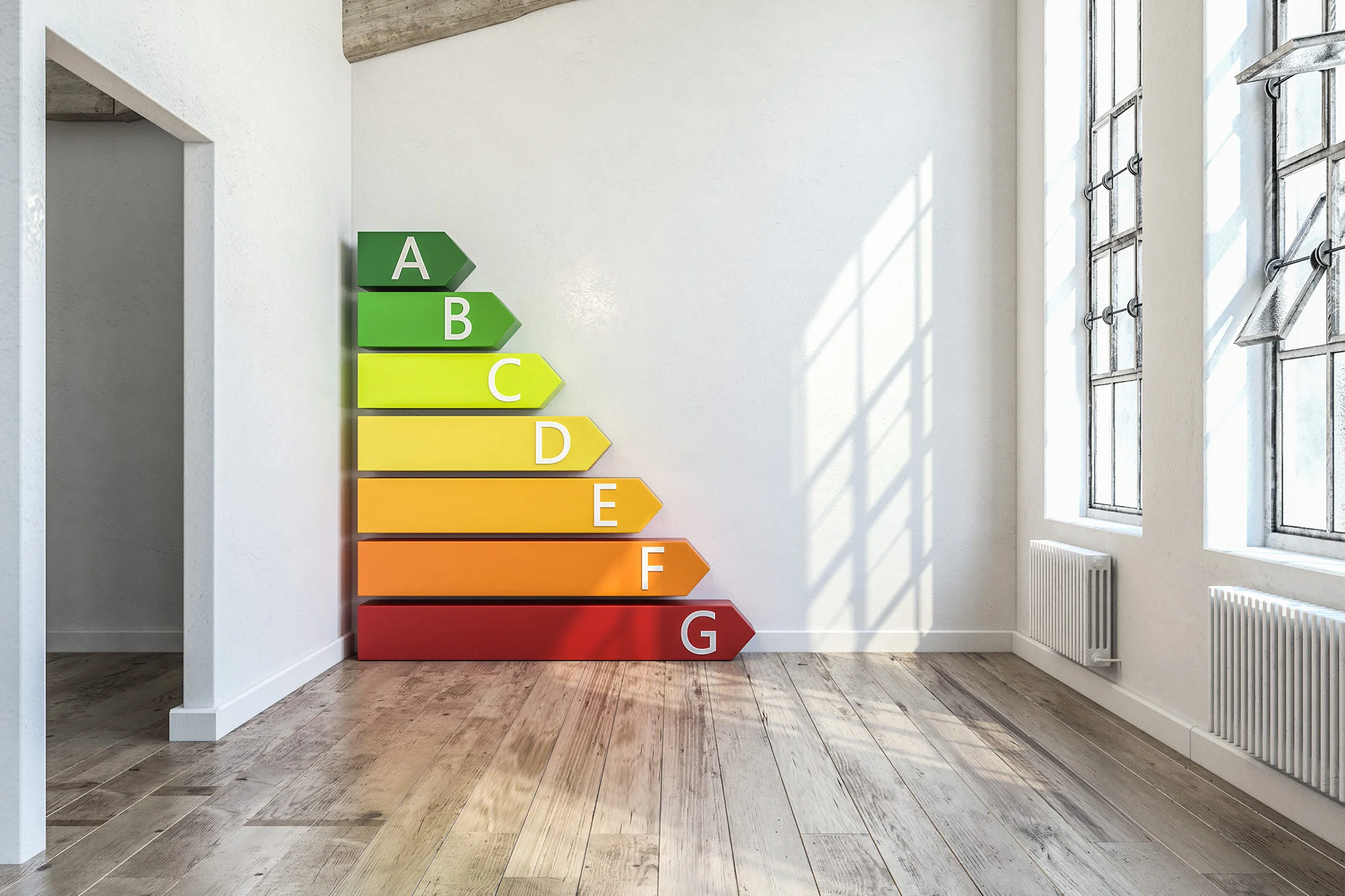
Its centrepiece is a colour-coded scale of energy efficiency classes from A+ (very efficient) to H (very inefficient), similar to the labelling of household appliances. Colloquially, the energy performance certificate is also referred to as an energy pass or energy passport.
What is an energy performance certificate?
The legal basis is the German Buildings Energy Act (Gebäudeenergiegesetz, GEG), which has been in force since 1 November 2020. It consolidated the former Energy Saving Ordinance (EnEV), the Energy Saving Act and the Renewable Energies Heat Act. The provisions on energy performance certificates are set out in Sections 79 to 88 GEG. Anyone wishing to sell, newly let or lease out a residential or commercial property is required to have the document – and must present it to interested parties, unprompted, no later than at the first viewing.
Important to understand: the energy performance certificate always rates the building as a whole, not the individual apartment. Even if you are only selling or letting a single condominium unit in an apartment building, you therefore need the energy performance certificate for the entire building. Certificates for individual residential units are not provided for.
The two types: demand certificate and consumption certificate
The GEG recognises two types of energy performance certificate, which differ considerably in methodology, informative value and cost: the energy demand certificate (Bedarfsausweis) and the energy consumption certificate (Verbrauchsausweis). Both are valid for ten years and legally equivalent, provided the free choice between them applies.
The demand certificate: the calculated analysis
The demand-based energy performance certificate rests on a technical analysis of the building fabric and the building services. A specialist assesses the thermal insulation of the external walls, roof, basement ceiling and windows, the type of heating system including its year of installation, and the hot water supply.
From this, the theoretical energy demand is calculated – i.e. the amount of energy the building requires per year under standardised use and average climate conditions. The result is independent of the behaviour of the current occupants and therefore more objectively comparable. The certificate states the final energy demand and the primary energy demand, each in kWh/(m²·a), i.e. kilowatt hours per square metre of building floor area and year.
The consumption certificate: the evaluation of consumption data
The consumption-based energy performance certificate, by contrast, evaluates the actual, metered final energy consumption of the last 36 months – typically based on heating cost statements or bills from the energy supplier for gas, oil, district heating or electricity. The figures are climate-adjusted using climate factors from the German Meteorological Service, so that a particularly mild or harsh winter does not distort the result.
The consumption certificate is considerably cheaper, but it always also reflects the heating behaviour of the occupants: a frugal single person in a poorly insulated old building can produce better figures than a large family in a refurbished house.
Demand certificate vs. consumption certificate at a glance
| Criterion | Demand certificate | Consumption certificate |
|---|---|---|
| Data basis | Building fabric, thermal insulation, heating type, building services | Metered energy consumption of the last 3 years |
| Method | Engineering calculation using standardised procedures | Evaluation of billing data, climate-adjusted |
| Depends on user behaviour | No | Yes |
| Informative value | High, objectively comparable | Limited, usage-dependent |
| Inspection required | On-site visit or meaningful photos/documents | Generally not |
| Typical cost (single-family house) | approx. 300 to 600 euros | approx. 50 to 150 euros |
| Validity | 10 years | 10 years |
| Modernisation recommendations | Yes, detailed if desired | Yes, but more generic |
| Mandatory for new builds | Yes, always | Not permitted |
In short: the demand certificate answers the question “How good is the building?”, the consumption certificate answers “How much was consumed here recently?”. For prospective buyers, the demand certificate is usually the more valuable assessment, because it reveals weaknesses in the building envelope and provides a better basis for refurbishment decisions.
When do you need which energy performance certificate?
Whether you may choose between a demand and a consumption certificate is governed by Section 80 GEG. Free choice is the rule, the obligation to use a demand certificate the exception – but an important one in practice.
The demand certificate is mandatory if all three points apply
- The building is a residential building with no more than four apartments,
- the building permit application was filed before 1 November 1977, and
- the building does not meet at least the energy standard of the 1977 Thermal Insulation Ordinance (Wärmeschutzverordnung 1977, WSchVO 1977) – for instance through later refurbishment.
A typical case: an unrefurbished single-family house built between 1900 and the mid-1970s. For such an old house, only the demand certificate is an option. If, however, the old building was subsequently modernised to the point where it meets the requirements of the WSchVO 1977 (e.g. through insulation and new windows), the free choice applies again.
Free choice between both certificate types exists for
- residential buildings with five or more apartments – i.e. the classic multi-family building – regardless of the year of construction,
- residential buildings of any size whose building permit application was filed on or after 1 November 1977,
- non-residential buildings, provided the required consumption data for 36 months is available.
Demand certificate mandatory for new builds
For new buildings, the developer must always have an energy demand certificate issued – consumption data simply does not exist yet. The certificate must be issued without delay after completion and handed over to the owner. The same applies to extensive alterations to existing buildings if overall energy calculations under the GEG are carried out in the process, for example as part of a major refurbishment.
| Building situation | Permitted certificate type |
|---|---|
| New build (residential and non-residential) | Demand certificate only |
| Residential building, up to 4 apartments, permit application before 1 Nov 1977, unrefurbished | Demand certificate only |
| Residential building, up to 4 apartments, permit application before 1 Nov 1977, refurbished to WSchVO 1977 standard | Free choice |
| Residential building, up to 4 apartments, permit application from 1 Nov 1977 | Free choice |
| Multi-family building with 5+ apartments (old or newer existing stock) | Free choice |
| Non-residential building with complete consumption data (36 months) | Free choice |
| Non-residential building without usable consumption data | Demand certificate only |
Practical tip for selling a house: even where free choice applies to a sale, prospective buyers and financing banks increasingly ask specifically for a demand certificate. If you are planning a refurbishment or a sale at a good price anyway, the more thorough option often pays off.
Energy performance certificate obligation: when the document must be available
Is an energy performance certificate mandatory? In most transaction situations, yes. The GEG requires the certificate for:
- Sale of a building, a condominium unit or part-ownership – the energy performance certificate when selling a house is not optional, it is a legal requirement,
- new letting, leasing or hire-purchase – including the letting of a single rental apartment,
- new construction and certain extensive refurbishments,
- property advertisements: if a property is advertised in commercial media, mandatory details from the certificate must be stated – including the certificate type, the final energy figure, the main energy source of the heating system, the year of construction (for residential buildings) and the efficiency class.
Procedure: presentation at the viewing, handover after signing the contract
The energy performance certificate or a copy must be presented to interested parties, unprompted, no later than at the viewing – clearly displayed or handed over. If no viewing takes place, the document must be handed over without delay upon request.
After the purchase or rental contract has been concluded, the buyer or new tenant receives the certificate or a copy without having to ask. These obligations expressly also apply to estate agents involved in the sale or letting process.
Display obligation for public and highly frequented buildings
An additional display obligation applies to certain non-residential buildings: in buildings used by public authorities with heavy public traffic and a usable floor area of 250 m² or more, the energy performance certificate must be displayed in a clearly visible place. Private buildings with heavy public traffic (e.g. department stores, banks, hotels) of 500 m² or more must likewise display an existing certificate.
Exemptions: who does not need an energy performance certificate
- Owner-occupiers: anyone who lives in their own house or apartment and does not intend to sell or newly let it does not need a certificate. There is also no retrofitting obligation for existing, unchanged tenancies.
- Small buildings: buildings with a usable floor area of no more than 50 m² are exempt.
- Listed buildings: the certificate obligation does not apply to protected historical monuments – for listed buildings, the energy performance certificate is voluntary. If one is nevertheless issued, it can be used for marketing purposes when selling.
- Special buildings: for example buildings that are not regularly heated, stables, underground structures or provisional buildings with a short service life.
Selling or letting a house without an energy performance certificate: the consequences
Selling a house without an energy performance certificate, or letting without one, is an administrative offence. Anyone who fails to present the certificate, presents it late or incompletely, or omits the mandatory details in the advertisement risks a fine of up to 10,000 euros under Section 108 GEG. There are also civil-law risks: if warranted energy figures deviate significantly from reality, buyers or tenants may under certain circumstances assert warranty claims.
Energy efficiency classes: figures, table and interpretation
The energy efficiency class is derived from the building’s final energy indicator in kWh/(m²·a). For residential buildings, the scale on the energy performance certificate currently ranges from A+ to H and is defined in Annex 10 of the GEG. For orientation: a figure of 100 kWh/(m²·a) corresponds roughly to a consumption of 10 litres of heating oil or around 10 m³ of natural gas per square metre and year.
| Efficiency class | Final energy in kWh/(m²·a) | Typical buildings |
|---|---|---|
| A+ | up to 30 | Passive house, KfW Efficiency House 40, new build with heat pump and PV |
| A | over 30 up to 50 | New build to the current GEG standard, KfW Efficiency House 55 |
| B | over 50 up to 75 | Recent new builds, comprehensively refurbished existing stock |
| C | over 75 up to 100 | Well-refurbished old building, solid existing property from approx. 2002 |
| D | over 100 up to 130 | Partially refurbished buildings from the 1980s/1990s |
| E | over 130 up to 160 | Older buildings with individual modernisation measures |
| F | over 160 up to 200 | Largely unrefurbished houses from the 1960s/1970s |
| G | over 200 up to 250 | Unrefurbished old building with an old heating system |
| H | over 250 | Unrefurbished old house, e.g. built in 1900, without thermal insulation |
What do energy performance classes D, E, F or G mean in concrete terms? The table of values shows: there are considerable cost differences between the levels. A class B building needs at most 75 kWh/(m²·a), a class G building up to 250 kWh/(m²·a) – more than three times as much.
Example calculation: heating costs by efficiency class
Assume an apartment of 120 m² and a natural gas price of 0.12 euros per kWh:
| Class | Indicator (assumed) | Annual consumption | Heating costs per year |
|---|---|---|---|
| B | 70 kWh/(m²·a) | 8,400 kWh | approx. 1,008 euros |
| D | 120 kWh/(m²·a) | 14,400 kWh | approx. 1,728 euros |
| F | 190 kWh/(m²·a) | 22,800 kWh | approx. 2,736 euros |
| H | 270 kWh/(m²·a) | 32,400 kWh | approx. 3,888 euros |
In this example, almost 2,900 euros in heating costs per year separate class B from class H. The energy performance certificate is thus a tangible calculation tool for tenants and buyers – and, for owners, an argument that directly affects the market value of the property.
Final energy and primary energy: two indicators, two statements
The energy performance certificate always states two figures. The final energy demand or consumption describes the amount of energy that arrives at the building – i.e. what you pay your supplier for. The primary energy demand additionally takes into account the upstream chain of extraction, conversion and transport of the energy source.
To this end, the final energy figure is multiplied by a primary energy factor: grid electricity has a factor of 1.8, natural gas and oil 1.1, wood only 0.2. A house heated with wood pellets can therefore achieve a very good primary energy figure even though its final energy consumption is high. For classification into an efficiency class, the final energy figure is decisive for residential buildings; the primary energy demand reflects the climate-policy assessment of the energy source.
Who issues an energy performance certificate?
Energy performance certificates may only be issued by persons who are authorised to do so under Section 88 GEG. These include in particular:
- architects, interior architects and civil engineers,
- engineers and graduates of relevant disciplines (e.g. building services engineering, building physics, electrical engineering) with the corresponding additional qualification,
- master craftsmen of relevant trades as well as state-certified technicians,
- chimney sweeps with the appropriate qualification – the question “What does an energy performance certificate from the chimney sweep cost?” is therefore a legitimate one; many district chimney sweeps offer certification as an additional service,
- certified energy consultants, for example from the list of energy efficiency experts maintained by the German Energy Agency (dena).
Stricter qualification requirements apply to non-residential buildings than to residential buildings. The issuer is liable for the accuracy of the information – even when relying on data provided by the owner, the issuer must check it for plausibility.
Creating an energy performance certificate online: reputable or not?
You can easily have the consumption certificate created online: you submit the building data and the consumption statements of the last three years via a form, an authorised specialist checks the details and issues the certificate – usually within a few working days, often as an express service within 24 hours. This is legally permissible and unproblematic provided the data is complete and correct.
The demand certificate is also offered online. Here the following applies: an on-site inspection is not strictly required by law; the issuer may instead rely on suitable documents and photos provided by the owner. For complex buildings, unclear data or a planned refurbishment, however, an on-site visit by an energy consultant is clearly the better choice.
With online providers, make sure that a named, authorised expert takes responsibility for the certificate and that an official registration number is assigned. A generic “test winner” seal is no substitute for this check.
Important: as an owner, you may not create an energy performance certificate entirely yourself unless you are personally authorised to issue certificates. Free online calculators that let you compute the energy consumption indicator yourself (for instance with an Excel template) provide a useful initial assessment – but they are not a legally valid document for a sale or letting. A “free energy performance certificate to print out” from the internet does not meet the GEG requirements either.
Registration number and monitoring
Every energy performance certificate is assigned a nationally unique registration number. The registration body under the GEG is the German Institute for Building Technology (DIBt). The registration number is used for random sample checks of issued certificates. A certificate without a registration number is a warning sign – if in doubt, you can request the number from the issuer and have it verified.
How much does an energy performance certificate cost?
The costs are not fixed by law and depend on the certificate type, the size of the building and the effort involved. As a guide:
| Service | Typical cost | Note |
|---|---|---|
| Consumption certificate online (residential building) | approx. 50–100 euros | Data submitted via a form, no on-site visit |
| Consumption certificate from an energy consultant/chimney sweep | approx. 100–250 euros | incl. plausibility check, possibly a short visit |
| Demand certificate online (data collected by the owner) | approx. 100–300 euros | Quality depends heavily on the data supplied |
| Demand certificate with on-site inspection (single-family house) | approx. 300–600 euros | Recommended for old buildings and before refurbishment |
| Demand certificate for a multi-family building | from approx. 400 euros, depending on the number of units | Costs can be apportioned by the owners’ association |
| Certificate for non-residential buildings / commercial property | often 500–2,000+ euros | depending on floor area, building services, zoning |
Who bears the costs? In principle, the owner or the seller or landlord. Passing the costs on to tenants via service charges is not permitted. For rented properties, however, the expenses may be tax-deductible as income-related expenses; for owner-occupiers this is generally ruled out. If in doubt, ask your tax adviser.
Beware of offers for a completely free energy performance certificate: a legally valid document involves checking and issuing effort. “Free” offers are often tied to other services (such as an estate agency contract) or provide only a non-binding assessment without a registration number.
Obtaining an energy performance certificate: how to proceed
Strictly speaking, an energy performance certificate is not applied for at a public authority but commissioned from an authorised specialist. The process in four steps:
- Clarify the certificate type: based on the year of construction, number of apartments and state of refurbishment, check whether you have free choice or whether the demand certificate is mandatory (see the overview table above).
- Choose an issuer: energy consultant, architect, engineering firm, qualified chimney sweep or a reputable online provider. Compare the scope of services, not just the price.
- Compile the documents: depending on the certificate type (see below).
- Issuing and registration: the issuer calculates the indicators, assigns the efficiency class and modernisation recommendations, and registers the certificate with a registration number.
Documents required for the consumption certificate
- heating cost or energy statements for the last 36 months (gas, oil, district heating, electricity in the case of a heat pump),
- information on vacancies during the billing period,
- year of construction of the building and the heating system, type of heating (e.g. gas central heating, oil boiler, heat pump),
- living space or building floor area, number of residential units,
- information on whether hot water is supplied via the central heating system or decentrally (e.g. instantaneous water heater).
Documents required for the demand certificate
- building plans, floor plans, sections, calculation of living/usable floor area,
- details of the building envelope: structure and insulation of external walls, roof, top-floor ceiling, basement ceiling, window types and glazing,
- data on the building services: heating type, year of installation of the heat generator, energy source (natural gas, oil, electricity, wood, district heating), hot water supply, ventilation system,
- evidence of refurbishments carried out (invoices, contractor declarations).
Excursus: the building floor area in the energy performance certificate
The energy performance certificate for residential buildings does not state the living space but the building floor area (Gebäudenutzfläche) – an energy-related calculation figure derived from the heated building volume, which is therefore larger than the living space.
As a rule of thumb: building floor area ≈ living space × 1.2 (× 1.35 for heated basements). So do not be surprised if your 150 m² house is listed in the certificate with around 180 m². Since the indicators are stated per square metre of building floor area, they appear arithmetically somewhat more favourable than if they were based on the living space.
Example calculation: how the final energy consumption is determined
How a consumption certificate calculates can be shown with a simplified example. Starting point: single-family house, built in 1994, 150 m² of living space, gas central heating including hot water supply.
- Building floor area: 150 m² × 1.2 = 180 m²
- Natural gas consumption according to the statements: 24,000 kWh (year 1), 26,500 kWh (year 2), 24,500 kWh (year 3) → average 25,000 kWh/year
- Climate adjustment using a climate factor (example 1.05, location-dependent based on data from the German Meteorological Service): 25,000 kWh × 1.05 = 26,250 kWh/year
- Final energy consumption: 26,250 kWh ÷ 180 m² = approx. 146 kWh/(m²·a)
Result: at around 146 kWh/(m²·a), the house lands in energy efficiency class E. In practice, the hot water share is additionally normalised and, where necessary, a flat-rate supplement is applied if hot water is not included in the consumption data; the principle, however, remains the same. The actual calculation in the certificate follows the requirements of the GEG and the associated official notices – your self-calculated figure is an approximation, not an official indicator.
For comparison: if the same house were energetically refurbished (insulation of roof and façade, new windows, heat pump), a final energy consumption of 50–70 kWh/(m²·a) would be realistic – class A to B and a saving of roughly two thirds of the heating energy.
Validity: how long is an energy performance certificate valid?
An energy performance certificate is valid for ten years from the date of issue – this applies equally to the demand and the consumption certificate. After that, you may no longer use it for a sale or new letting and must have a new one issued.
Certificates issued under the old Energy Saving Ordinance (EnEV) that are still within their term also remain valid until the ten years expire; very old documents from the early period starting in 2007/2008 have all expired by now.
The certificate becomes invalid prematurely if the building is extensively altered and new energy calculations become necessary in the process – for instance after a complete refurbishment. Smaller individual measures such as replacing windows, by contrast, do not automatically invalidate the certificate.
A new certificate is nevertheless almost always worthwhile after a refurbishment, because the better efficiency class supports the market value. Remember: for ongoing owner-occupation, no “fresh” certificate is needed – the ten-year period only becomes relevant when a sale or letting event occurs.
Reading the energy performance certificate correctly
What does an energy performance certificate look like? The multi-page document follows an official template:
- Page 1 – building data: address, building type (residential/non-residential), year of construction of the building and the heat generator, energy source, number of residential units, building floor area, share of renewable energies, registration number, date of issue and expiry, and the reason for issue (new build, sale, letting, display, other).
- Page 2 – demand figures: for the demand certificate, the scale with final and primary energy demand, efficiency class, greenhouse gas emissions in kg CO₂/(m²·a) and comparison values.
- Page 3 – consumption figures: for the consumption certificate, the scale with the climate-adjusted final energy consumption, broken down into heating and hot water.
- Page 4 – modernisation recommendations: cost-effective suggestions for improving energy efficiency, e.g. insulating the top-floor ceiling or replacing the heating system.
- Page 5 – explanations: notes on the methodology and the terminology.
Only the values page matching the certificate type is ever filled in. A detailed, independent explanation of the individual fields is provided by the German consumer advice centre (Verbraucherzentrale).
What does the energy performance certificate tell you – and what does it not? It is a comparison tool for energy quality, not a consumption guarantee. Actual consumption depends on user behaviour, the number of occupants and the weather. Nor does the certificate replace individual energy advice: anyone planning a concrete refurbishment should additionally consider a subsidised building energy consultation with an individual refurbishment roadmap.
Non-residential buildings, commercial properties and mixed-use buildings
Separate rules apply to non-residential buildings – i.e. office buildings, retail spaces, halls and other commercial buildings. The energy performance certificate for commercial properties covers not only heating and hot water but also built-in lighting, ventilation and air conditioning.
The reference figure is the net floor area, and the efficiency scale differs from that for residential buildings, since non-residential buildings have widely varying benchmark values depending on their use. For the consumption certificate for non-residential buildings, electricity consumption is also stated separately.
For mixed-use buildings – for example a residential building with a shop on the ground floor – the share of non-residential use is decisive: if the commercial part is substantial (rule of thumb: more than about one tenth of the total floor area) and the use differs significantly, the residential and non-residential parts must be treated separately and two certificates are issued. Smaller commercial shares are allocated to the predominant type of use.
Common special cases in practice
Energy performance certificate for an old house
For an unrefurbished old building with up to four apartments and a building permit application filed before 1 November 1977, there is no way around the demand certificate. If building plans are missing, the issuer can record the building data during an inspection; this increases the cost of the certificate for an old house somewhat, but delivers reliable results.
For a house built around 1900 without insulation, figures beyond 250 kWh/(m²·a) – class H – are not uncommon. That is unpleasant for marketing purposes, but honest: prospective buyers factor in the refurbishment anyway.
Energy performance certificate for condominiums and multi-family buildings
Since the certificate relates to the building as a whole, the property management company or the owners’ association is usually the right point of contact in a multi-family building. Individual apartment owners have a claim against the association to procure the certificate if they wish to sell or let their apartment; the costs are regularly apportioned according to co-ownership shares.
From five residential units upwards, free choice applies, so the cheaper consumption certificate based on the central heating cost statement is often prepared.
New builds and the KfW Efficiency House
For a new build, the energy consultant or planner produces the demand certificate practically as a by-product of the GEG compliance documentation. Anyone constructing a KfW Efficiency House (e.g. Efficiency House 55 or 40) or refurbishing an existing property to that standard needs the demand-based calculation for the subsidy anyway – the Efficiency House level describes the primary energy demand relative to a reference building (Efficiency House 55 = 55% of the reference value).
A provisional energy performance certificate?
The GEG does not recognise an official “provisional energy performance certificate”. Advertisements sometimes contain wording such as “energy performance certificate available at the viewing” or “being prepared” – but the valid document must actually exist by the viewing at the latest. As a seller or landlord, do not rely on leniency: the mandatory advertisement details apply from the moment the listing is published.
Outlook: the new energy performance certificate 2026
With the revised EU Buildings Directive (Directive (EU) 2024/1275, EPBD), the energy performance certificate is facing its biggest reform since its introduction in 2007.
Member states were required to transpose the requirements into national law by 29 May 2026; in Germany, implementation is taking place via an amendment to the Buildings Energy Act, being prepared as the Building Modernisation Act (Gebäudemodernisierungsgesetz), whose parliamentary procedure has not yet been completed. The most important planned changes:
- New EU scale: the efficiency classes are to be harmonised across Europe – from A to G instead of the current A+ to H. Class A is reserved for zero-emission buildings; class G is intended to represent roughly the 15 per cent of the national building stock with the worst energy performance. The specific kWh thresholds are set by each member state itself.
- Extended presentation obligations: in future, the certificate is also to be required when rental contracts are extended and after “major renovations” (more than 25% of the building envelope or of the building value).
- More content: additional mandatory details are planned, for instance on CO₂ emissions and more concrete, prioritised refurbishment recommendations, as well as greater digitalisation via central building registers.
Important for owners: existing energy performance certificates remain usable until the end of their regular ten-year validity. There is no obligation to exchange valid certificates early. Anyone currently planning a sale or new letting can, under the law as it stands, have a certificate issued with the familiar A+ to H scale.
As the national detailed rules have not yet been finalised, it is worth following the legislative process – reliable information is provided on the website of the Federal Ministry for Housing, Urban Development and Building.
Frequently asked questions about the energy performance certificate
From which year of construction is an energy performance certificate required?
The certificate obligation does not depend on the year of construction but on the occasion: a sale, new letting, lease or new build triggers the obligation – for old and new buildings alike. The year of construction only determines which certificate type is permissible (cut-off date: building permit application before 1 November 1977).
Where do I get an energy performance certificate?
From authorised professionals: energy consultants, architects, engineers, qualified master craftsmen and chimney sweeps – locally in your area or via reputable online providers. Public authorities do not issue energy performance certificates.
Does the landlord have to present the energy performance certificate?
Yes. For every new letting, the landlord must present the certificate unprompted, no later than at the viewing, and hand a copy to the new tenant after the contract has been signed. In an ongoing, unchanged tenancy, by contrast, there is no entitlement to a (new) certificate. The energy performance certificate itself does not become part of the rental contract, but its figures are frequently included in the property description.
Demand or consumption – which energy performance certificate is better?
The demand certificate is more informative and the better basis for refurbishment planning and demanding buyers; the consumption certificate is cheaper and faster. Where a demand certificate is not mandatory, the choice is a trade-off between cost and informative value.
How old may an energy performance certificate be?
A maximum of ten years from the date of issue. After that, a new certificate is required for a sale or new letting.
Is the German energy performance certificate also valid in Austria?
No. With its Energy Certificate Presentation Act, Austria has its own rules and its own indicators (including the heating demand figure HWB). For properties in Austria, a certificate prepared under Austrian law is required.
Conclusion
The energy performance certificate is both a mandatory document and a source of information: it creates transparency about final energy consumption or demand, assigns buildings to energy efficiency classes and provides initial modernisation recommendations. Sellers and landlords should commission the document in good time – the consumption certificate is often available within a few days, while the demand certificate with an on-site visit needs lead time.
First check which certificate type is permissible for your building, compile the documents in full and make sure you use an authorised professional and receive a registration number. If you also want to refurbish, it makes sense to combine the certificate with a subsidised energy consultation – turning the legal obligation into a concrete roadmap for lower energy costs and a higher property value.